It is not easy to trek at high altitudes, like the Everest Base Camp Trek. You’ll need to be physically and mentally prepared for trekking in such a location. This training plan for the Everest Base Camp Trek will provide you an estimation about the workouts and regimes so that you could be prepared for the trek..
EBC Trek or simply the Everest Trek, is a journeys that is on everyone’s wishlist, especially those who are an adventure enthusiasts.
The main reason is that Mt. The highest mountain in the world, Everest, is located at an elevation of 29,031.69 feet, 8,848.86 meters. Everyone has the aspiration of summiting Everest or seeing it from a close distance. To reach its summit requires months of advanced training.
Nevertheless, to trek to its base camp (5,364 m/17,598 ft), you don’t need any professional or advanced training. However, you still need to prepare by exercising your body and mind at home or in the gym at least once a day for an hour a month before your trip. We’ll discuss every workout you need to do for trekking the EBC in the near future in the sections below. Just trust and follow all the instructions wisely.
I assure you that when the time comes, they will be of assistance to you. Is a training plan necessary for the Everest Base Camp Trek?
Although not mandatory, it’s always better to pe prepared and be in your best form before the Everest Base Camp Trek.
In addition to Everest, all of Nepal’s high-altitude treks necessitate physical fitness. There are a lot of people who complete the EBC trek without any initial preparations however i still recommend trekkers to create a training plan for the EBC Trek.
During the trek, you won’t have much trouble if you’re an athlete or a regular at the gym and cardio. However, if you haven’t jogged or exercised in a while, I strongly suggest that you plan at least a month in advance of the trek. But before I mention anything, what I’d like to state here is the difficulty level, elevations, and duration of this wonderful trip.
The trek is moderate to challenging in difficulty. It is suitable for experienced and first-timers of all ages and almost every age group. This is because it’s both easy and hard.
The trail ain’t that technically demanding, making it easy to hike or ascend. However, the trek will begin at Lukla (2,860 m/9,383 ft) and eventually reach Kalapatthar (5,555 m/18,225.07 ft), the adventure’s highest point, via the EBC, which serves as the main starting point. Additionally, this trek’s elevation can undoubtedly present a challenge. If you don’t hire a porter and want to carry your belongings all by yourself for up to 14 days, you’ll typically walk between 5 and 8 hours per day while trekking with a heavy backpack on your shoulders. So now, I guess you might’ve already know if you need to train for this journey or not.
How To Train For The Everest Base Camp Trek?
You shouldn’t underestimate this trek because you already know how hard it will be, how high it will be, and how long it will take. Instead, I believe you are more motivated than ever to increase your strength and stamina and prepare mentally for this trip. There are a few exercises best suited for trekking to the EBC or anywhere in high elevations that you’ll need to do. As discussed above, try these workouts daily for an hour, for at least a month, before you leave your home for this adventure.
It doesn’t matter how old you are as long as you prepare well. You can complete this trek without running the risk of running into any health issues along the way. However, your age and fitness level don’t matter at all while hiking at such a height if you aren’t being serious and cautious. Don’t worry, we’ll also discuss what to do during the trek later in another section, even after learning about the exercises that you should do before your journey.
Here, for now, I would like to explain some basic but useful workouts to train for the Everest Base Camp Trek:
Stretching
Stretching should always be done at the beginning of any physical workout. All of your body parts should be able to move before engaging in strenuous exercise or outdoor activities. When you do this, your chances of getting hurt while working out or hiking are lower. What stretching actually does is help you increase the flexibility of tight muscles, which in turn helps you perform better in the outdoors and in everyday life. Besides, it also contributes to your pain relief and mental calm.
Cardiovascular Conditioning
Exercises, such as running, swimming, or cycling, strengthen your lung and heart capacity. At high altitude locations like the Everest Region, you’ll find it hard to breathe after walking for even an hour, and your heartbeat also increases. If your lungs and heart are functioning well and strong during trekking to the EBC, you’ll have a lower risk of getting sick.
As a result, you should think about working out for at least 30 minutes a day with either of these exercises. Your ability to perform strenuous physical activity and endurance have both increased. Training for Strength During the Everest Trek, whether you hire a porter or carry your own backpack, you will feel pressure in your thighs and knees. The only difference is that hiring a porter may result in less pressure or a more gradual assault on your lower body. However, if you carry your belongings yourself, you might feel the stress sooner. However, there is certain pressure on the lower body parts. When you get to the goal height, most of your body weight is on your thighs. When you go down, the same thing happens to your knees. Hence, to enhance your lower body, lunges, step-ups, and squats with a heavy tool, like a dumbbell held in your hand, help boost them.
You can do all three exercises or at least one of them every day. Squatting is one of these three common exercises for the lower body. Therefore, I would also suggest you don’t miss doing squats; the rest depends on your choice. Nevertheless, for better outcomes, doing all three workouts would be wise.
Also, consider doing upper-body exercises, such as push-ups, chin-ups, and planks. On the trekking route, where you typically have to carry your belongings on your back, these workouts help you maintain upper-body stamina.
Small Day Hikes
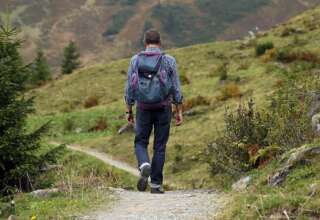
Try going on a hike to the nearby hill or mountain in your hometown at least twice or thrice before going out for the EBC Trek if you haven’t done a long walk in your life before. It’ll be much better if you also carry a bit heavy backpack while doing hiking practice.
Doing so will help you get confidence for your future adventure at high elevations. You must be able to endure the pain and pressure that you get while ascending because you already know the difficulty of this trek.
Mental Preparation
Along with physical preparation, mental preparation is also essential and part of the EBC Trek training plan. What I say is that a strong mind is more powerful than a strong body.
Your excellent physical condition makes no sense if you lack mental fortitude. Therefore, don’t miss working on strengthening your mentality along with physical preparation.
Regarding mental rehearsal, you can practice meditation. Simply shut your eyes, empty your mind, and concentrate on your Everest Trek. Now, imagine each stage of your journey, from the flight to Lukla to successfully reaching base camp. When you think about this trek, put all the negative thoughts out of your head. Rather, just visualise the stunning landscape of the Everest Region, views of Mt. Everest, and other nearby peaks that you often see on social media.
Doing so will help you believe in yourself. Also, boost your ability to overcome any sudden trouble that could approach by chance while trekking.
Training Plan for Everest Base Camp Trek
It’s essential to make a daily workout routine to prepare for the EBC Trek. Consequently, I have prepared a typical routine for you below. This Weekly plan is just to provide you with a rough idea about the training regime, and you can modify it according to your availability.