This marked my second effort to reach Mera Peak. The initial journey to Mera Peak did not meet my expectations. Back in 2022, I trekked the Machame route on Kilimanjaro for seven days. Despite enduring headaches from the third day onward and feeling nauseous on the night of the summit, I managed to complete the Kilimanjaro hike and return safely, though it was quite challenging.
Reflecting on it now, I regret not opting for Ian’s eight-day Lemosho route plan. Often, we must learn from our own errors.
Acclimatization is Essential for Achievement
For both Kilimanjaro and Mera, I put considerable effort into my training. The differentiator was my focus on interval training, but I’ve come to realize that without proper endurance training and acclimatization, you lack the necessary preparation.
My reasoning for Mera Peak was that since Kilimanjaro reaches nearly 20,000 feet and I managed that in seven days, perhaps I could handle a 10 or 12-day trek for Mera Peak, which stands at 21,246 feet. I was mistaken! Staying at a high altitude is significantly different from merely reaching it, a lesson I have now come to understand.
For my first Mera Peak adventure in 2023, I chose a local guide, but the trip was poorly organized from the beginning. I hadn’t considered the itinerary deeply enough and merely accepted what was presented to me. The plan was dreadful, and I experienced altitude sickness while crossing Zatrwa La Pass at 15,157 feet (4,620m). By the time I reached Khote at 11,811 feet (3,600m) on Day 3, it was all over for me. The entire experience, from the pre-trip details to how the guides interacted with us and the inadequate itinerary, was chaotic.
Avoid the Shorter Itinerary
On Day 2, we trekked over the 15,157-foot pass, and I fell gravely ill. I experienced nausea, dizziness, and an intense headache. There were three others in my group, two of whom also became ill, and all three of us had to be airlifted back to Kathmandu. What a disaster! I initially held the local team responsible, but in hindsight, I recognize that the oversight was mine for not researching the itinerary adequately.
Upon my return home, I vowed never to attempt the trip again. However, as time passed, I realized there were still goals I wanted to achieve. My partner began searching for more information online, and Ian’s website kept appearing, filled with excellent details and reviews. She encouraged me to set up a conversation with Ian, which I eventually did. We talked about altitude, training, and how to adequately prepare for Mera Peak. The itinerary offered was longer, and the level of service appeared much more professional. This was the right team for me.
The Local Team is Outstanding
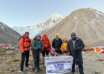
Upon my arrival at the airport, Dawa greeted me, while Sonam and Alok welcomed me at the hotel, assisting with my orientation. Kay conducted the briefing where he emphasized the significance of maintaining hygiene, adhering to the pace set by the guides, and ensuring adequate hydration throughout the journey. Our head guide was Jimi Sherpa, accompanied by four other guides who supported our group of nine climbers. It is clear why they received the International Tourism Award in Nepal in 2019.
Traveling from Kathmandu to Lukla
We enjoyed a direct flight from Kathmandu to Lukla, which was fantastic. During my previous visit to Nepal, I had to travel to a remote airstrip to reach Lukla. The lack of sleep I experienced then contributed to the stress of my earlier Mera Peak journey.
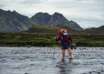
After arriving in Lukla, we organized our gear and began our hike to a village named Poyan. We took a different route than I had on my last trip, which felt refreshing and gave me a sense of reassurance. Our trek descended past the base of the Lukla airport and gradually ascended to an elevation similar to that of Lukla.
Effective Acclimatization
In the following six days, we ascended and descended through the lower Himalayas until we reached Khote. My last experience was so difficult that I was filled with doubt and anxiety about what was to come. However, with each passing day on this trip, I started to feel optimistic. I concentrated on staying hydrated and managing my relaxation during the acclimatization stage. So far, this approach was paying off!
The guides monitored our oxygen levels and heart rates, sending the data back to the office for verification. I maintained an oxygen saturation of between 88 to 92. All was progressing well, with every team member being well-prepared. More than half of them had prior experience on another Ian Taylor Trekking expedition.
Taking it Slow and Steady
We had a fantastic group of climbers and guides, and enthusiasm was building for the upcoming adventures. The team gradually ascended to Khare at 16,000 feet, where we would establish our base camp for three nights to further aid our acclimatization, examine our gear, set up our harnesses, and prepare to ascend further.
The guides were evaluating the weather, indicating that our opportunity for a summit attempt might soon close. Our itinerary involved spending two nights at Mera Peak Base Camp situated at 17,200 feet before progressing to High Camp at 19,000 feet.
The plan was to stay one night at Mera Peak Base Camp before moving on to Mera Peak High Camp. This was an excellent decision as a three-day storm was predicted to arrive the next day. After three nights in Khare, the team felt well-rested and ready for the climb.
Ascending Mera Peak
As we progressed towards Base Camp, three separate groups passed by us, bypassing Base Camp entirely and heading straight to High Camp. We learned later that only a few individuals reached the summit, while most did not succeed. The transition from Khare at 16,076 feet to High Camp at 19,000 feet is significant, especially with little time for acclimatization. I had faith in our team, set up camp, and believed we could all succeed.
After spending a night at Mera Peak Base Camp at 17,200 feet, we secured ourselves with ropes and began our ascent to High Camp. We moved at a deliberate pace while another group sped ahead. We reached High Camp around 2 pm, which was the perfect opportunity to hydrate and take a break. I experienced a slight headache, so I took 400mg of Ibuprofen and sipped on more water, and after about half an hour, I felt considerably better.
The team that had passed us did not even attempt to summit. They ran out of energy early on and had to turn back to Khare due to the altitude challenges.
Complete Success on Mera Peak
Our group of nine climbers was in position, prepared to leave for the summit. The plan was to rise at 1 am, drink a liter of water, have some soup and snacks, and set off by 2 am. The guides estimated that reaching the summit would take about five hours, which turned out to be accurate.
The initial part of our summit night was relatively warm. Gradually, the temperature began to drop as we ascended slowly towards the peak. I was paired with two strong climbers, and we collaborated effectively.
The terrain was relatively simple at first, with an incline of around 30 degrees. As time went on, we encountered steeper sections at a 40-degree angle. We moved into a resting position further up just as the sun began to rise. I started to feel reenergized and was confident that we would achieve the summit.