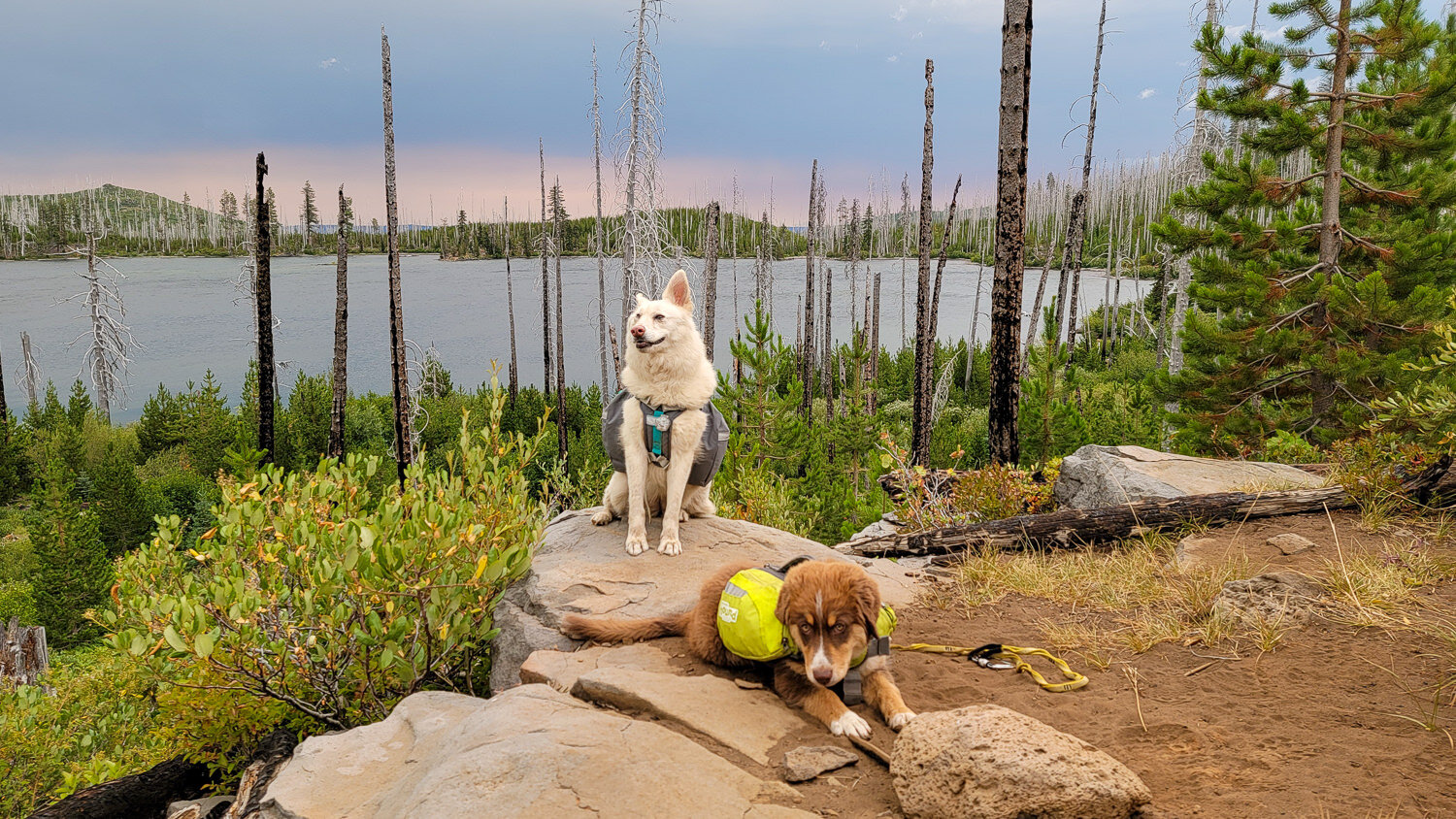
Hiking and backpacking with dogs can be a rewarding outdoor experience, but they also come with unique challenges. Over the years, the CleverHiker team has learned the best tricks to keep our pups safe, our sleeping pads intact, and our trail time stress-free.
Our four-legged friends are always down for adventure, and they’re the most enthusiastic hiking partners we could ask for. But we’ve made a few mistakes with our hiking companions that we wish we could have avoided. Dogs require extra attention and care to make sure the experience is safe and enjoyable for both of you.
Following the tips in this guide will prepare you and your pooch for the trail and build confidence to take them on longer hikes and backpacking trips. After all, a long walk with their best friend is your dog’s dream come true.
Keep up with vaccinations, medication, and vet visits. The most important thing you can do for your best bud’s health is take them to the vet regularly. Your veterinarian can answer any questions you may have about hiking with your dog and offer helpful advice on how to administer first aid to dogs. Check with your vet to make sure your dog’s vaccines, heartworm prevention, and flea and tick prevention are all current, as this can help them avoid serious health problems caused by things like a bite from another animal or drinking bad water (yes, dogs can get Giardia). And of course, you should have a plan for administering any medication your dog needs on extended hiking trips.
ID Tags & Microchips
Your dog should always wear an ID tag with your name and phone number while on the trail. It’s also best practice to microchip them, in case the worst happens and they get lost.
Be aware of signs of injury. All dogs have different ways of communicating to their person that something is wrong. If your dog is licking its paws, frequently rubbing a body part, sneezing/coughing, guarding a part of its body, limping, avoiding certain types of terrain, shivering, or being aggressive/barky, it’s likely your dog is in pain.
Also, dog backpacks need to be properly sized and weighted to prevent hot spots. When you take breaks or are in camp, do a full-body scan/massage to see if there are any issues. Check out our guide to the best dog backpacks for our top recommendations.
Some trail conditions can quickly deteriorate a dog’s paws or burn them, despite how thick and tough their pads appear. Sharp or loose rocks, hot sandy trails, snow/ice, and river crossings can destroy their pads and quickly end a trip.
RESEARCH THE TRAIL CONDITIONS AND BE PREPARED FOR EMERGENCIES
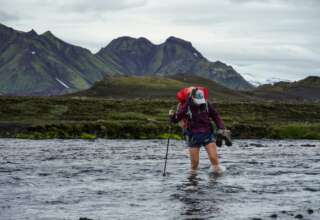
Be prepared to carry your dog. We never plan on it, but we’ve had to carry our dog over our shoulders like a sheep or stuffed into our backpack a number of times. We have carried her across rivers, glaciers, and lava fields, and to be honest, when we go backpacking trips where we aren’t 100% sure the trail conditions will be safe and suitable for dogs, we now leave our dog at home. Emergency dog slings that are lightweight and make it much simpler to evacuate a dog come from a variety of brands. Also, just because you know the trail, it doesn’t mean you know the current conditions. Some trails were perfect for our dog in the fall or winter, but then destroyed her paws in the summer. We’ve gone on backpacking trips with trails that led to washed-out bridges and made for seriously dangerous river crossings. Some trails are just too abrasive for dog paws. And every time we feel like dumb dumbs because it could have been avoided, it sucks for them, and it is scary.
When in doubt, consider taking your dog on short trips you are familiar with and get up-to-date trail condition reports. If you’re hesitating, there’s always a dog sitter from Rover.
Be prepared to keep your Dog on a leash
Many wilderness areas require dogs to be leashed, usually on a lead no longer than 6 feet, for a number of reasons. Often, these rules are in place to protect wildlife or sensitive ecosystems. Or it could be that it’s a high-traffic area, and keeping your dog on a leash will help others enjoy their time on trail.
Whatever the reason may be, it’s important to follow these rules for the safety of you, your dog, other hikers, and local flora and fauna. In areas where leashes aren’t required, it’s still a good idea to leash your dog near fast-moving water, steep drop-offs, or when you see another trail user (whether it’s another hiker or wildlife). Keep in mind that your dog may be very friendly, but that doesn’t mean all dogs are or that everyone wants your dog to approach them.
Bottom line: don’t be that person who has an uncontrollable dog that ruins the experience for wildlife and other users.
Don’t take your dog where it isn’t allowed
Similar to the reasons an area may require you to keep your dog on leash, some areas don’t allow dogs at all. If you take your dog to a location where it is prohibited, you run the risk of damaging a sensitive area, disturbing wildlife that is protected, and/or incurring a fine. train with your dog ahead of time
Don’t take your dog into marmot country and expect them to listen to you; it’s like telling a kid not to touch any toys in a toy store. In the wilderness, your dog will be even more excited, and there are a lot of live “squeaky toys” that will entice and distract your dog. It’s stressful for everyone involved.
Before you head into the wilderness, work with your dog on basic commands. In highly distracting environments, we recommend that your dog be proficient in the commands come, leave it, sit, and stay. Good recall (come) is especially important if your dog is going to be off-leash at all, so you can call them back if they wander a little too far from you or you need to leash them quickly. “Leave it” is also important so you can regain their attention if they’re tempted to chase wildlife or nibble at something potentially dangerous.
Remember to train for the situation in a controlled (low distraction) environment at first and then gradually increase the level of distractions/temptations to mimic backpacking through chipmunk and deer habitats. When the time comes to put your dog’s skills to the test on the trail, make sure you pack along plenty of training treats to reward good behavior.